
Bitpanda performance: your real return
What your money earned with Bitpanda once deposits, fees, dividends and exchange rates are counted.
Why the Bitpanda number doesn't add up
Rewards are income
Staking rewards increase what you hold. Counting them at their value on the day you received them keeps the cost basis honest.
Crypto next to everything else
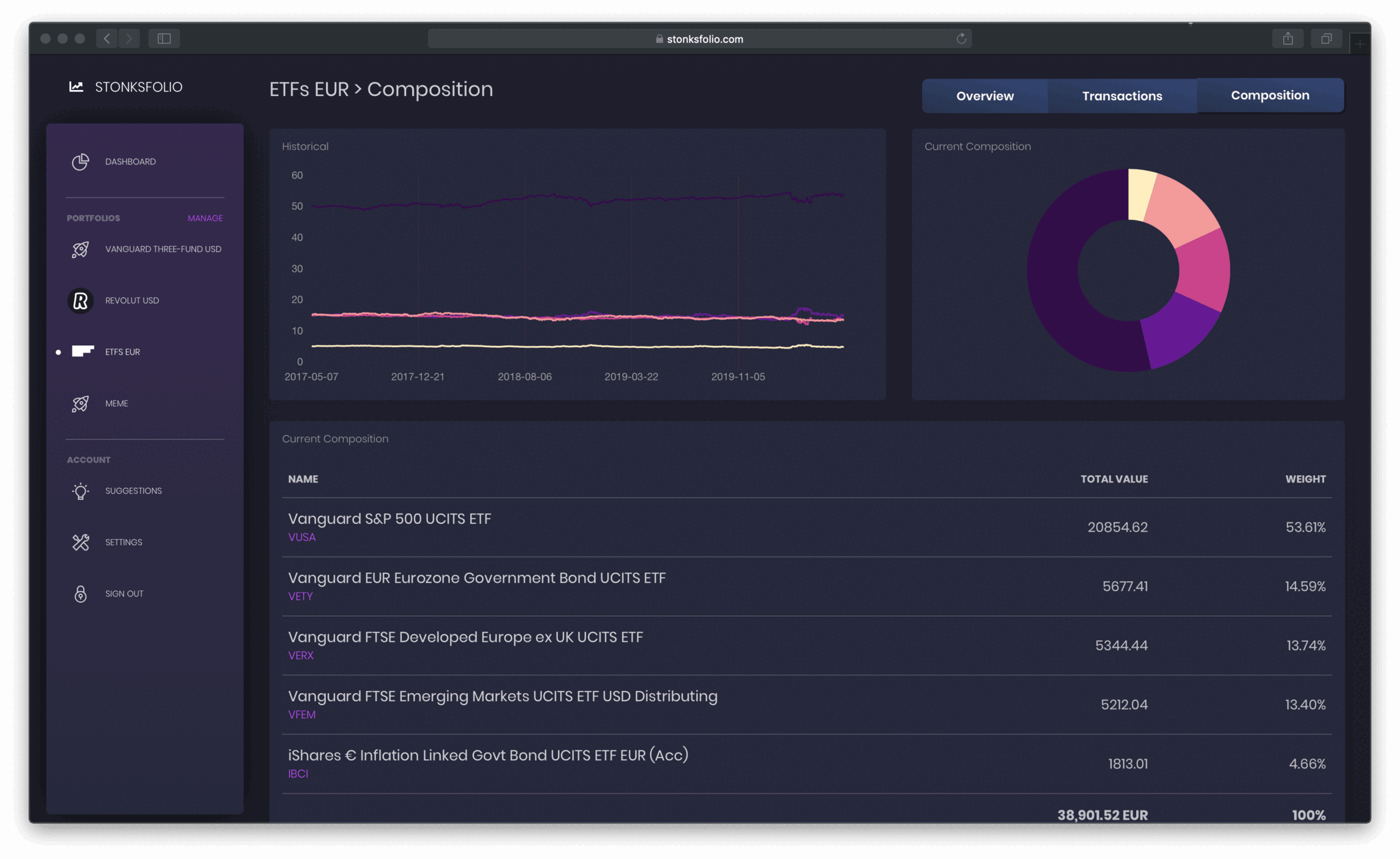
A crypto return on its own says little about your money if most of it sits in ETFs with another broker, so it helps to see both in one place.
Time-weighted return and net return
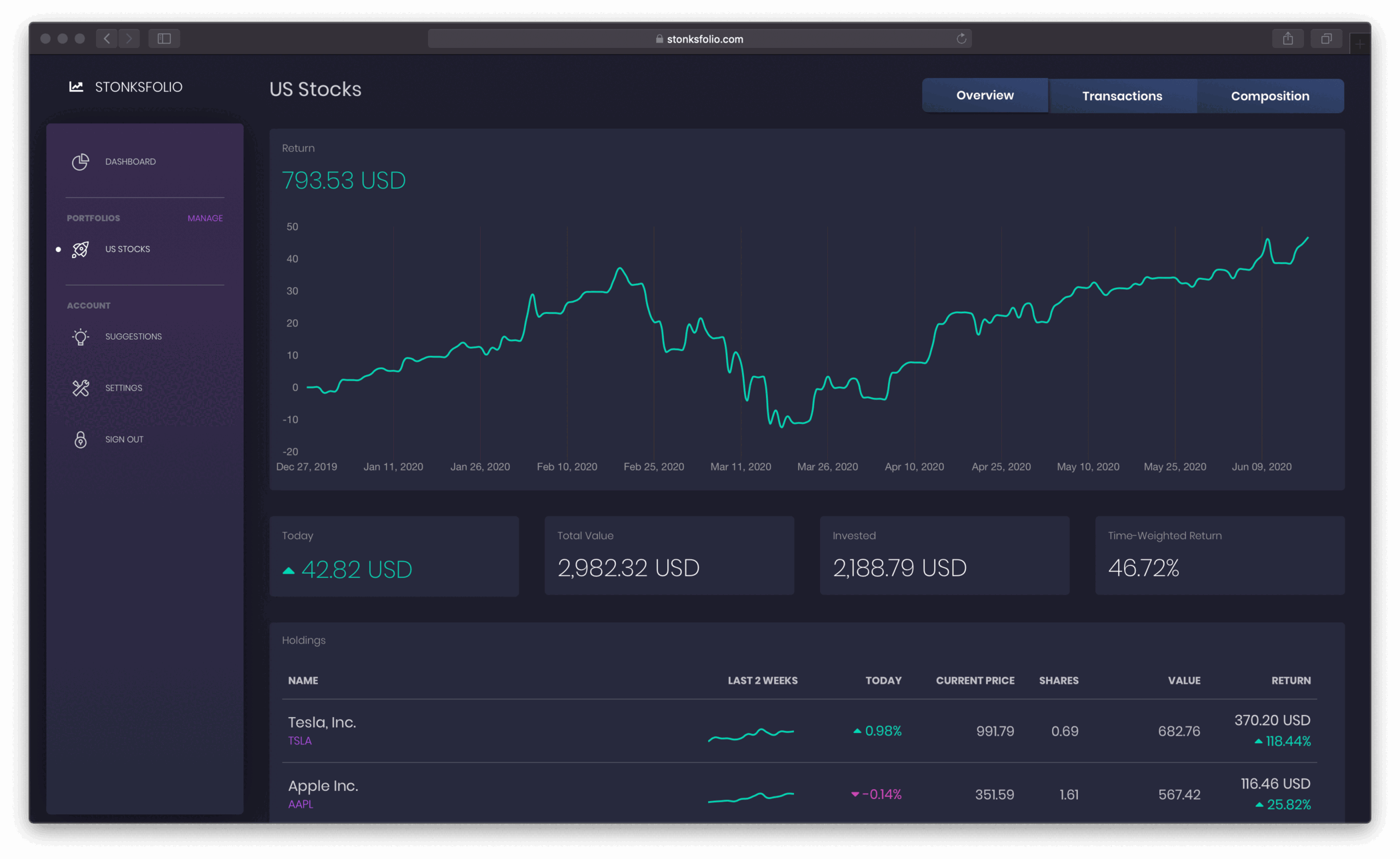
How well did my investments do? The time-weighted return answers that. It ignores when and how much you deposited, so you can compare it with an index or a fund.
How much money did I make? The net return answers that, in money, after every deposit, withdrawal, dividend and fee.
Did you beat the index?
Once your Bitpanda trades are in, put your return next to the S&P 500, MSCI World or gold over the same period, and see whether picking your own investments paid off.
Import from Bitpanda in a few minutes
- Log in to Bitpanda on the web and open the profile menu in the top-right corner.
- Select History to see every trade, transfer and reward.
- Click the export icon and choose CSV.
- Upload the file to your portfolio in Stonksfolio.
Each step is explained in more detail in Bitpanda export to CSV.
Questions
How do I see my real return on Bitpanda?
Import your Bitpanda history into Stonksfolio. It works out the time-weighted return, the net return in money and the effect of exchange rates from your trades and payments.
What is a time-weighted return?
A return that removes the effect of deposits and withdrawals. It shows how your investments did, regardless of when you added money, so you can compare it with an index or a fund.
Why is my return in Bitpanda different from Stonksfolio's?
A broker usually compares what your holdings are worth with what you paid for them. That mixes in the timing of your deposits and leaves out positions you have sold and dividends paid out as cash.
Can I compare Bitpanda with my other brokers?
Yes. Each broker can be its own portfolio, and the aggregated view on the Pro plan adds them up into one total and one return.
See what your Bitpanda portfolio really earned
It's free to start and you don't need a credit card.